Build to Sell Finance

Looking for Build to Sell Finance on the Gold Coast? Elevate Financial helps developers secure strategic property development funding for duplex, townhouse and spec builds. Book a strategy call today.
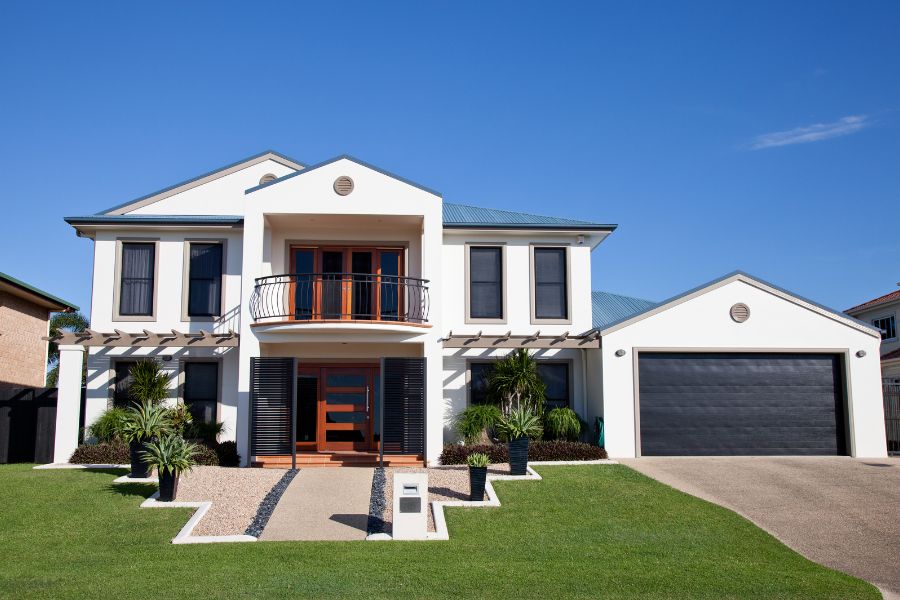
Modern newly built double-storey spec home in Australia representing build to sell property development funded through strategic development finance on the Gold Coast.

Turn your development project into profit without cash flow pressure

Building to sell requires a different finance strategy than building to hold. At Elevate Financial, we structure specialised Build to Sell Finance for developers, investors and builders across the Gold Coast and Australia who are constructing property for resale.

Whether you are developing a duplex, townhouse project or spec home, this type of funding is assessed on the strength of your project — not just your personal income. That’s where strategic structuring becomes critical.

What Is Build to Sell Finance

Development and construction finance in Australia refers to loans used to fund a property project from land purchase through construction. They are typically short-term facilities ranging from about 6 to 24 months and tailored to the unique phases of development, including acquisition, construction and exit funding.

Build to Sell Finance is specifically structured for projects where the property is intended to be sold on completion rather than held long term. This type of funding is often used by developers or investors whose strategy is to recycle capital quickly into their next opportunity.

Unlike traditional loans that may require significant personal income servicing, these solutions focus on project feasibility, projected end value, and exit pathways — which may appeal to experienced investors who are comfortable with development risk and cash flow timing.

How Build to Sell Finance Works

  • Project assessment and feasibility
    Lenders assess the viability of your project based on detailed development plans, site value, build costs and expected end value.
  • Valuation and underwriting
    An “as if complete” valuation is obtained to confirm the future value of the project once built. Lenders evaluate risk based on this future value and the proposed exit strategy.
  • Progressive drawdowns
    Funds are released in stages aligned with construction milestones and agreed project phases — a common practice in Australian development finance to manage risk and cash flow.
  • Interest capitalised
    Instead of monthly repayments, interest is added to the loan balance during the build and marketing periods. This protects your cash flow while construction proceeds.
  • Sale and exit
    Once the property is completed and sold, the loan is repaid from the sale proceeds, allowing you to unlock profit and recycle funds into your next project.
Modern completed home interior representing a build to sell property development in Australia.

How Development Finance Is Assessed

Unlike standard residential lending, development finance focuses heavily on the viability of the project itself. Lenders consider the fixed-price building contract, feasibility analysis, contingency buffer, developer experience, valuation of the completed project and the clarity of the exit strategy.

Depending on the structure, funding is commonly provided at a percentage of total development costs or a portion of the projected end value. Because policy varies significantly between lenders, structuring the application correctly can make the difference between approval and decline.

Why Use a Strategic Mortgage Broker?

Development lending is complex, and lender appetite changes frequently.

As a Gold Coast-based mortgage broker with access to more than 60 lenders, Elevate Financial compares major banks, non-bank lenders and private funders to identify the most suitable solution for your project profile. We assist with structuring, packaging, valuation coordination and managing funding stages through to completion.

Our focus is not just obtaining approval — it’s ensuring your funding supports long-term wealth-building strategy.

FREQUENTLY ASKED QUESTIONS

Build to Sell Finance involves specialised lending criteria that differs significantly from standard residential loans. Below, we answer the most common questions about development funding, lender requirements, borrowing capacity, risk assessment and exit strategies to help you better understand how build-to-sell projects are structured in Australia.

Build to Sell Finance is a short-term development loan designed for projects where the intention is to construct property and sell it upon completion. Unlike a standard home loan, approval is based primarily on the feasibility and projected end value of the project rather than solely on personal income.

It is commonly used for duplex builds, townhouse developments and spec homes across Australia.

A standard construction loan is typically for owner-occupied or long-term investment properties. Build to Sell Finance, by contrast, is structured as short-term development funding where repayment occurs from the sale proceeds of the completed property. Because the lender’s exit relies on the resale, they assess risk differently and apply commercial-style lending criteria.

Most lenders fund between 65% to 75% of total development costs, or a percentage of the Gross Realisation Value (GRV). The exact amount depends on your experience, project type, location, contingency buffer and lender policy.

Higher leverage may be possible with strong feasibility and experience, but conservative structuring is generally recommended to protect profit margins.

GRV refers to the projected market value of the completed development. It is determined by a formal valuation based on comparable recent sales and current market conditions.

Lenders use GRV to assess risk and calculate maximum loan exposure.

Experience is highly regarded by lenders, particularly for multi-dwelling projects. However, first-time developers may still be eligible if they have a strong fixed-price building contract, a realistic feasibility study, appropriate contingency funds and a clear exit strategy.

The right lender selection is critical in these cases.

Development finance applications typically require a detailed feasibility study, fixed-price building contract, plans and specifications, council approvals (if applicable), valuation report, and evidence of contingency funds. Lenders may also require a quantity surveyor (QS) report for larger projects.

Because documentation requirements are more complex than residential lending, correct packaging is essential.

Yes. Build to Sell Finance is considered higher risk than standard residential lending. As a result, interest rates and fees are typically higher and structured more like commercial finance.

However, the focus should be on overall project profitability rather than headline rate alone.

Most Build to Sell facilities are structured for 12 to 24 months, depending on the construction timeline and anticipated sale period.

Extensions may be possible but should not be relied upon as the primary exit strategy.

For small developments such as single dwellings or duplex projects, pre-sales are often not required. For larger townhouse or multi-unit developments, lenders may require a percentage of dwellings to be pre-sold before funding construction.

Pre-sale requirements vary significantly between lenders.

Lenders require a clear exit strategy before approval. This may include refinancing to an investment loan, retaining the property as a rental, or extending the loan term where permitted.

Having a secondary plan reduces risk and strengthens your application.

Yes. Build to Sell Finance is widely available for suitable residential developments across the Gold Coast and broader Australian market. However, lender appetite may vary depending on suburb, demand and market conditions.

Working with a mortgage broker who understands local market trends can improve your approval outcome.

Let’s Build Your Financial Future Strategically

Contact us today to start your journey with a team that thinks beyond the loan.